

Stay Updated With Our Latest Insights
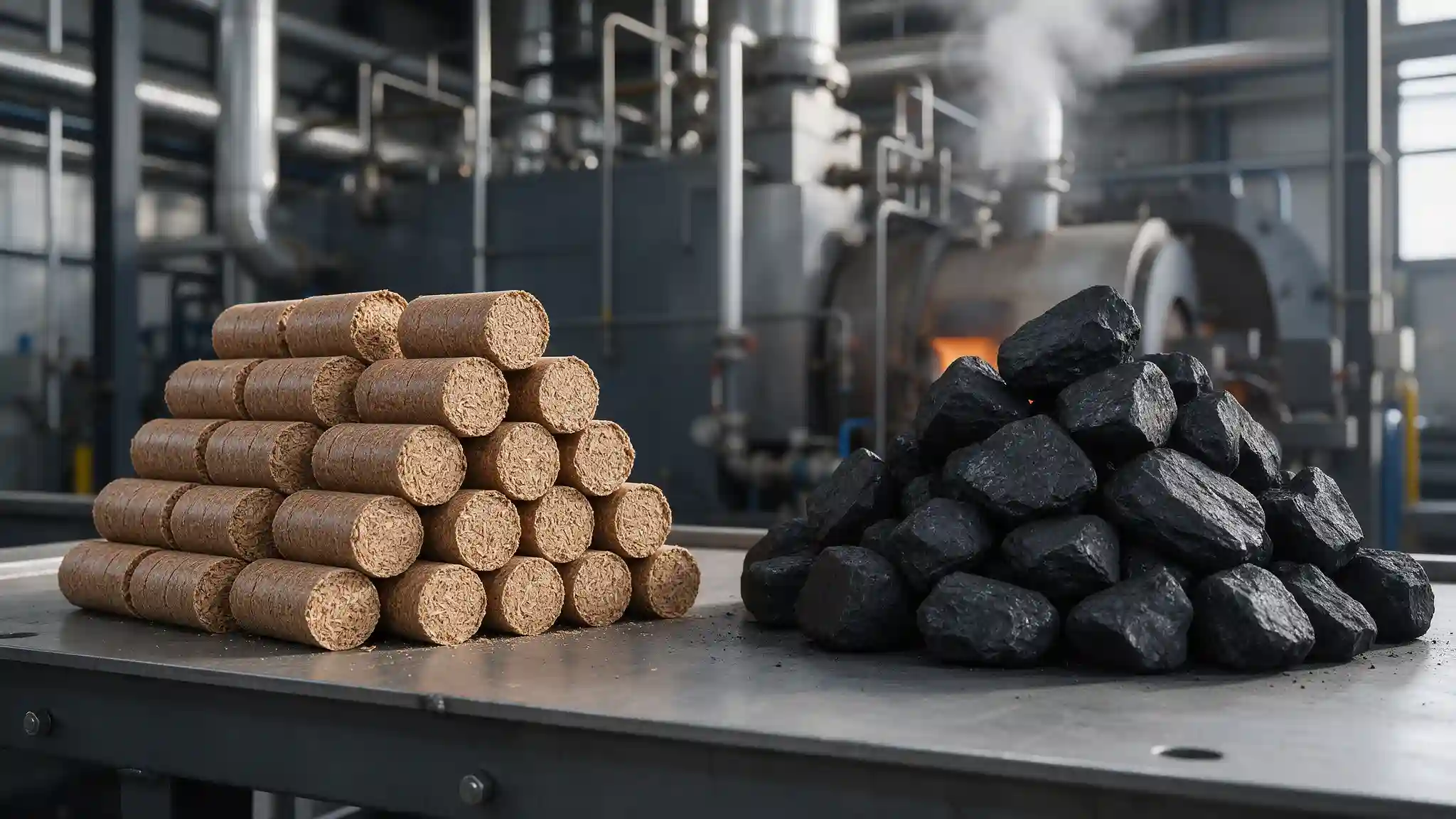
Industrial heating fuel is chosen on the basis of balancing cost, heat value, heating equipment, cost of storage and what the environment will handle are all relevant when selecting a fuel for industrial heating. Coal has been used for industrial heating for many years because of the existing supply chains and energy density of the fuel. Fuel briquettes are an option made from other waste such as wood, paper, cardboard, agricultural waste and coal. Comparing fuel briquettes vs coal will inform you on the cost per usable heat, storage, maintenance and emissions for each alternative fuel.
Fuel briquettes are shaped blocks or cylinders of compressed biomass, such as sawdust, wood waste, other plant materials, or biomass waste. The cylindrical shape and high density are easier to store, transport, and handle than loose biomass in bulk, and briquettes can be easier to burn than loose biomass.
Industrial fuel briquettes are intended for use in boilers, furnaces and other heating appliances which have been designed or modified to utilize solid fuels. For manufacturing processes they require them for steam generation; heating the water and other process streams; drying or for other manufacturing processes. Their fuel consumption will be decided upon moisture contents, heating value, density of combustion and so on.
Emissions, ash and handling properties of Credent Exports fuel briquettes have different energy values, combustion properties, as well as emissions than coal. Additionally, both fuels generate different ash properties and have different handling requirements. Provided you select the desired grade, coal is a high and consistent source of heat. Biomass fuel briquettes are capable of producing heat, simultaneously using the collection of farm and wood processing wastes. Below mentioned table indicates fuel briquettes vs coal key difference.
| Comparison Factor | Fuel Briquettes | Coal |
|---|---|---|
| Raw material | Often agricultural or wood residues | Fossil fuel extracted from mines |
| Calorific value | Varies with biomass type and moisture | Varies by coal grade |
| Combustion | Depends on density, moisture, and fuel composition | Depends on coal grade and combustion system |
| Ash content | Varies with feedstock and contamination | Varies by coal type |
| Emissions | Biomass combustion produces particulates and other pollutants | Combustion produces particulates, sulphur pollutants, and fossil CO₂ |
| Storage | Requires protection from moisture | Requires dry, organised storage and dust management |
| Equipment needs | May require adjustments to feeding and combustion controls | Often supported by established coal-fired systems |
The Calorific value of fuel briquettes shows the energy released by burning. The coal heating value depends on the grade, which affects any one fuel's energy rating. Moisture content decreases the energy available because energy must be used to convert the moisture into steam; many other factors- such as fuel density, efficiency of burning, and air supply- influence heat output. Companies should have consistently tested calorific values to compare on the same basis and compare actual boiler or furnace performance, not fuel weights.
Ash content affects cleaning cycles, disposal issues and potential build-up inside heating equipment. Biomass fuel can contain less sulphur than most coal, but ash content is determined by feedstock and contamination. Both fuels produce air emissions in the form of solid particulates and other gaseous emissions, such as fossil CO2 in the case of coal, and future biogenic CO2 for wood. Proper filtration and control, and routine maintenance of equipment, are key issues for both.
The fuel briquettes cost does not necessarily mean which is the cheapest. A comparison should be made of the production cost of one unit of useful heat by taking into consideration its value, combustion efficiency and the weight of fuel required. Distance traveled, transportation charges, storage space, use of ash and maintenance of machinery etc. may be considered.
Say a lower cost fuel also takes more tonnes to supply equivalent heat. Alternatively local supplies of biomass briquettes would eliminate, or at least reduce transportation expenses, or result in savings in appropriate applications. Anyone considering switching to a coal alternative for industries should purchase samples, request quotations from suppliers, and compute operating costs based on their actual energy demand.
Fuel briquettes can have advantages including, where the feedstock is of local agricultural or wood processing waste, the potential for utilisation of waste, reduction of coal reliance, and use as an alternative for industrial heat. Biomass fuel briquettes can have the potential to reduce fossil carbon emissions compared to coal, though this is dependent on feedstock, transportation and combustion efficiency.
However, this does not mean for all applications briquettes can simply replace all other forms of industrial fuels on the spot. These physical and chemical characteristics of briquettes also vary, and so do suppliers and even batches of briquettes. And they may need more storage capacity than a higher fuel to deliver a unit of energy to a site.
Fuel briquettes for industrial heating can be considered by food processing enterprises, industrial dryers, manufacturers of textiles and agricultural producers, or those using the steam or hot water or process heat, may be used, as may some other drying or industrial steam generation.
Nevertheless, co-firing with coal will also be dependent on the design of the equipment, the operating temperature and heat requirements, and the method of fuel feeding. Companies need to speak to equipment suppliers or an engineer before making the switch. A 'trial and error' experiment could determine whether use of biomass briquettes for boilers can provide the desired heat output and reliability.
Choosing reliable Fuel briquettes manufacturers in India like Credent Exports is not only to look at the quoted price. Buyers should request a technical specification sheet (TS) form with calorific value, moisture content, ash content, size and shape of the briquettes as well as specification of the raw materials. Such test reports should specify the measurement basis, if any.
Additionally, one should also look at sample quality, range of suppliers, packaging, delivery timelines and quantity range for supplies. Inquire about seasonal fluctuations, transportation plans and steps to be taken if the product is not up to the desired standards. An order of trial size can be used to test run the fuel briquettes to establish how well they burn before other larger orders are placed with fuel briquettes suppliers in India like Credent Exports.
You will need to consider the amount of energy produced, the operational costs, your equipment (stoves and boilers) as well as your supply of fuel and consideration of the environment. If you already have a boiler or stove that is designed to use coal, coal may be the best option. Else biomass fuel briquettes can provide a practical solution to your heat requirements.
| Exports may be used to find a fuel supply option for your product. Ensure your business gets the specifications available for the product Credent Exports has on offer, test reports are requested, and bulk supply capability is reconfirmed prior to any purchase. Contact fuel briquettes manufacturers in India for briquettes to inquire if they are suitable for your business's industrial heating needs. |
Fuel briquettes efficiency may be used successfully in compatible heating systems although the effectiveness of this will be subject to factors like calorific value, moisture, combustion control and appliance design. Compare the measured heat output with the published.
Yes, in some fuel briquettes for boilers. Compatibility will vary according to the configuration of the boiler, the supply system and combustion characteristics, together with any necessary adaptation. Check with the equipment manufacturer before changing fuels.
Check calorific value, moisture and ash content, composition, sample quality, and consistency of supply. Delivery capacity should be confirmed and the fuel tested in a live application prior to buying any large order to fuel briquettes suppliers in India.
Store it in a dry place. A covered and well-ventilated place is always a good idea. Keep it safe from damp ground and the elements and make sure it doesn't get wet in storage.
Will I have to make any changes to the way I operate my boiler? A: Yes, there may be some minor ventilation, feed and combustion adjustments to optimise the effect of the briquettes.
Ask Credent Exports about fuel briquettes product information, pricing and how to purchase in bulk. Buyers are able to verify the fuel quality and delivery conditions as well as whether it can be used for their process heating needs.


