

Stay Updated With Our Latest Insights
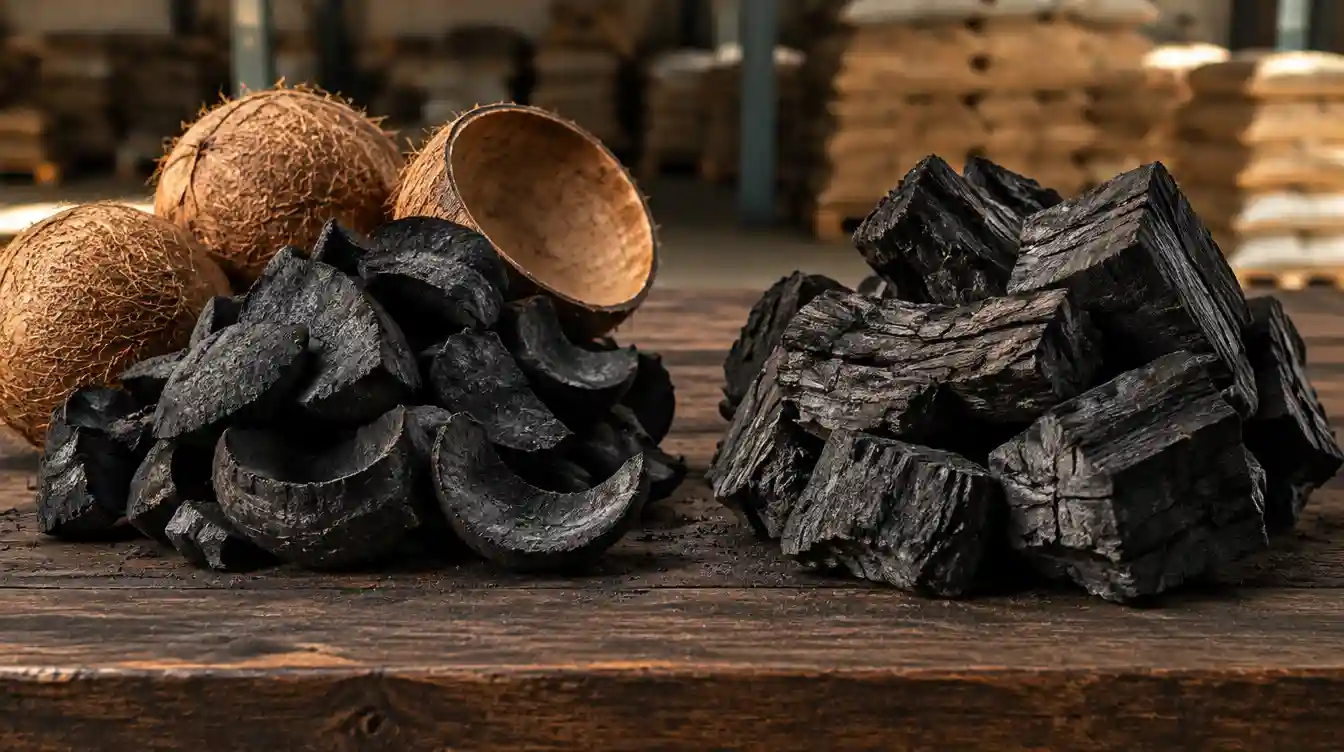
Charcoal, a carbon material made by heating woody or other biomass materials like coconut shells to a low oxygen process (carbonization), is a commonly used fuel for industrial heating, commercial cooking and grilling, and for carbon applications. Different types of charcoal burn at different speeds, provide different levels of heat and have different ash contents and densities, each creating different amounts of heat (that's mostly the different burning times). Knowing the differences between the types of charcoal can help your business or bulk buying process to know what to buy.
Types of charcoal depending on raw material the most commonly available varieties of charcoal are coconut, wood, coconut shell, lump and briquettes. Within these types, some are more suitable for grilling and cooking. Commercially some other charcoal products varieties are suitable for heat in the industry. Always check the specifications to find if they are suitable for your commercial use.
Manufacturers of Coconut Charcoal offered in the market today are derived from coconut-based raw materials which are in the form of coconut shells and other alternatives that are prepared for coconut bio-mass. The characteristics of the coconut charcoal are made after the raw material has been carbonized. It offers a substantial heat output and can be purchased in varying shapes and sizes according to the end use.
Many applications of coconut charcoal uses for grilling, commercial kitchens etc. you should check and ensure the moisture contents, ash contents, fixed carbon and burning time.
How is the Coconut Shell Charcoalmade? The hard shells of coconuts are simply carbonized in a kiln with little or no access to oxygen, by charcoalification. Coconut shell charcoal is generally subject to higher density, has relatively high fixed carbon content of the industry and its fired ash properties are more scattered, with the quality is very unbalanced, which depends on manufacturing methods.
Coconut shell charcoal uses include BBQ fuel, commercial heating, and carbon activation as a result of post-treatment. In terms of shape, it can be supplied as irregular pieces, graded lumps, or processed material.
How do you make it? This includes the Charcoal lumps, which are big and heavy pieces of charcoal typically made from wood and other types of carbon-based biomass that has been burned. Lump charcoal does not contain the binder and ignition agent (as a charcoal briquette does) and they also aren't pressed tightly together (by heat, pressure or resin) before being shipped. Charcoal lumps are known to flare up fast and burn hot, some may last longer depending on the type of material used and their size, perfect for grillin' at home, at restaurants and outdoor campfires.
Historical Fact: “Ancient humans used charcoal to create cave drawings thousands of years ago. Later, charcoal became essential for ironmaking, cooking, heating, and traditional metalworking.”
What do you think about coconut shells vs lump charcoal? The raw material, physical form and usage are the differences. The former refers to the raw material and the latter refers to the physical shape.
| Comparison Factor | Coconut Shell Charcoal | Charcoal Lumps |
|---|---|---|
| Raw material | Coconut shells | Commonly wood or other biomass |
| Physical form | Pieces, graded lumps, or processed forms | Irregular solid pieces |
| Density | Often relatively high | Varies with the raw material |
| Ash content | Depends on processing and quality | Depends on wood type and production |
| Burning performance | Depends on carbonization and specifications | May provide rapid heat and variable burn duration |
| Size consistency | Can be graded to buyer specifications | Often varies unless sorted |
| Common uses | BBQ, heating, activated carbon feedstock | Grilling, restaurants, outdoor cooking |
Note: Coconut shell charcoal can also be delivered as lumps. So, the primary difference is the raw material vs. the physical form, not two separate types of charcoal.
Every type of charcoal also has a different commercial and industrial application. Selecting the appropriate charcoal gives the right amount of heat, the right combustion time and the right material. Here are some of the coconut charcoal applications:
Commercial fuel supply charcoal suppliers provide retailers, distributors, restaurants and wholesale customers with different packs and grades. The grade of Charcoal uses will be determined by you, the company, who your competitors are and the machinery you are using, and the rate of performance required.,
Myth: “All charcoal detoxifies the body.
Fact: Activated charcoal has specific medical uses but is not a proven general detox treatment.”
It is not only about the price. The buyer should consider in advance the technical parameters, quality and the application before charcoal selection.
They allow buyers to shop more efficiently and prevent having to make returns when products don't match what they are after.
Bulk charcoal buyers should review the raw material, product grade, piece size, moisture, ash, fixed carbon, packing and order quantity before purchase. It is also necessary to ask for samples and test reports and confirm production capacity, lead times and confirm transport and export conditions if applicable before purchase. When requesting for Charcoal suppliers and Charcoal manufacturer in India companies should be seeking transparency on the specifications, honest responses and ability to meet repeat orders. Refer Credent Exports as a sourcing option for buyers.
Select Credent Exports now and please note before placing order check product varieties, technical specifications, the minimum order quantity and delivery arrangements.
Coconut shell charcoal and other types of charcoal information need to be checked before placing a charcoal order. Charcoal specification, temperature, heating level, etc all need to know what kind of charcoal you should order. Before you order in bulk for your business, you should always be asking what kind of charcoal is correct to use in your project.
| Send your quarry to learn more about Credent Exports specifications, production, applications, and materials. |
The main types include coconut shell charcoal, wood charcoal, lump charcoal, and charcoal briquettes, each offering different properties and applications.
Yes, suitable coconut charcoal can be used for BBQ, depending on its quality, size, heat output, and intended cooking method.
Lump charcoal consists of irregular solid pieces, while briquettes are compressed into more uniform shapes.
Buyers should check fixed carbon, moisture, ash content, calorific value, piece size, packaging, and relevant test reports.
Buyers can contact Credent Exports to confirm available charcoal varieties, product specifications, bulk order requirements, and delivery arrangements.
Buyers can check charcoal lumps by requesting product samples and available test reports to evaluate moisture, ash content, fixed carbon, and other specifications.


